Grad School for Plant Parents: 5 Advanced Skills Worth the Extra Credit

Photo by Photo by Sven Brandsma on Unsplash on Unsplash
Somewhere along the way, it happened. Your watering routine stopped being a guessing game. New leaves show up unannounced. Friends text you photos of their sad succulents asking what went wrong.
You've basically completed your undergrad in houseplant care. And like any good student, you're probably wondering: what's next?
Welcome to grad school. These five advanced skills are where confident plant parents separate themselves from the merely competent. Each one is a course unto itself — with prerequisites, a difficulty rating, and a very real payoff. No tuition required.
Course 1: Fertilizer Math (Yes, There Will Be a Quiz)
Difficulty: Moderate Prerequisites: Basic feeding schedule, comfort reading a product label
Most plant parents eyeball fertilizer. A splash here, a capful there. Grad-level feeding means understanding the NPK ratio — nitrogen, phosphorus, potassium — and actually calculating dilution rates.
Here's the short version: a 10-10-10 fertilizer delivers equal parts of each macronutrient. A 30-10-10 is nitrogen-heavy, which is why it's the go-to for foliage plants like ferns and calatheas. Once you can match a formula to a plant's needs, you stop buying five different bottles and start using one or two intelligently.
The math part: if the label says to use 1 teaspoon per gallon for feeding, that's roughly 0.25% strength. Many experienced growers fertilize at half or quarter strength with every watering instead of a full dose monthly — a strategy sometimes called "fertilizing weakly, weekly." It mimics how plants feed in nature and dramatically reduces the salt buildup that burns roots.
The payoff: Deeper green growth, no more crispy leaf tips from fertilizer burn, and a fertilizer shelf that finally makes sense.
Course 2: Humidity Engineering
Difficulty: Moderate to hard Prerequisites: A hygrometer (they're $10, buy one)
You know tropical plants like humidity. Grad school teaches you to engineer it rather than chase it.
Start by measuring. Most US homes — especially in winter when the furnace runs — sit between 20% and 40% relative humidity. Most tropical houseplants want 50% to 60% or higher. That gap is why your calathea looks ratty every January.
Now engineer solutions. Grouping plants creates a shared microclimate through transpiration. Pebble trays offer a modest boost. But the real grad move is a small humidifier placed near (not directly on) your plant cluster, ideally on a smart plug that kicks on when humidity drops below your target. One $40 humidifier can transform an entire plant shelf.
Skip the misting myth while you're at it — a two-second spritz evaporates before it does anything. Engineering beats ritual.
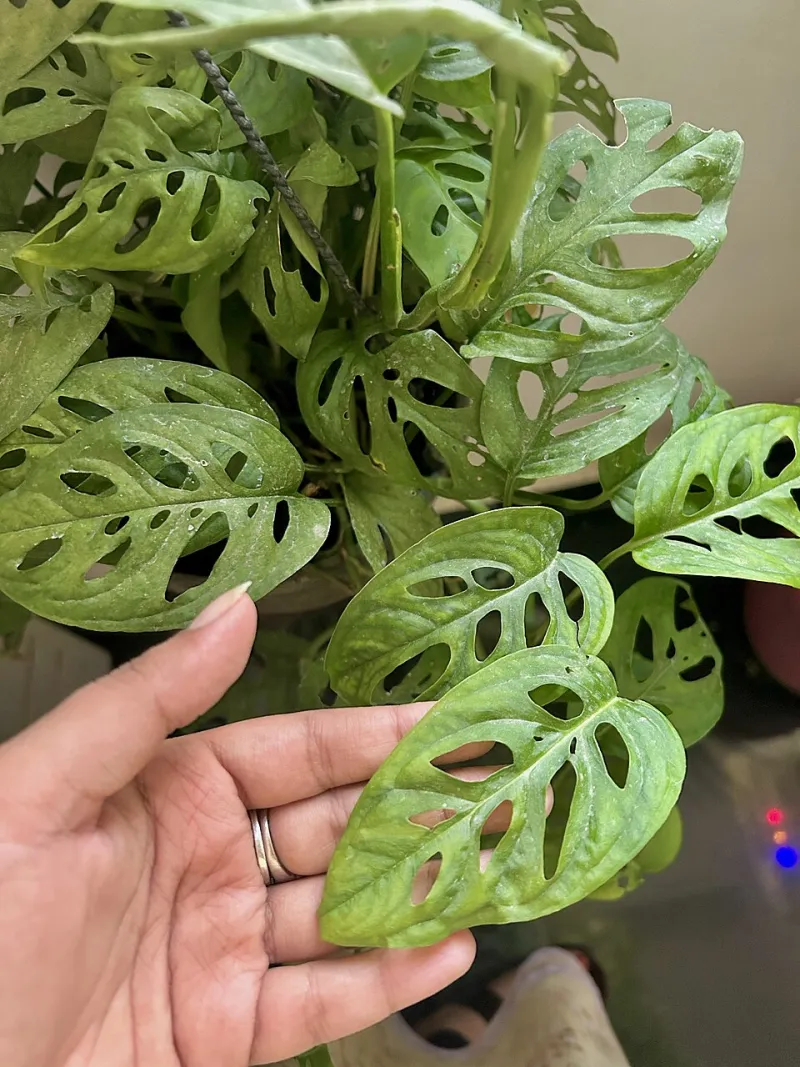
The payoff: Intact leaf edges on your calathea, happy aerial roots on your monstera, and a winter that no longer feels like a mass casualty event.
Course 3: Semi-Hydroponics — Growing Without Soil
Difficulty: Hard Prerequisites: Solid grasp of watering, willingness to experiment with plants you can afford to lose
Semi-hydroponics (often called "semi-hydro" or LECA growing) means swapping soil for an inert clay pebble medium and a reservoir of nutrient solution. The roots wick water upward as needed, and the air gaps between pebbles deliver constant oxygen.
The transition is the hard part. Soil roots and water roots are structurally different, so you have to clean every bit of soil off the roots, trim anything rotten, and let the plant rebuild its root system. Expect a few weeks of sulking. Some plants handle the switch beautifully — pothos, philodendrons, hoyas, and many orchids are star students. Finicky calatheas and some succulents flunk out.
The payoff: Once established, semi-hydro plants are shockingly low-maintenance. You top up a reservoir every couple of weeks, pests like fungus gnats lose their breeding ground, and root rot becomes nearly impossible. It's the closest thing to a plant care cheat code that exists.
Course 4: Repotting a Root-Bound Giant
Difficulty: Hard (physically and mentally) Prerequisites: Confidence with routine repotting, a tarp, and possibly a friend
Repotting a 4-inch pothos is a tutorial. Repotting a five-foot fiddle-leaf fig that's been in the same pot for four years is a capstone project.
The challenges scale with the plant: root balls that have literally fused with the pot, the logistics of moving a top-heavy giant without snapping it, and the judgment call of how much root pruning the plant can tolerate. The grad-level approach: water a day ahead to reduce stress, lay the plant on its side and work the root ball loose with a chopstick or your fingers, tease apart circling roots, and size up only 1 to 2 inches in pot diameter. Going bigger invites rot because wet soil sits around roots that can't reach it yet.
Do it in spring when the plant has a full growing season to recover, and expect some drooping for a week or two. That's not failure — that's the plant reallocating resources to its roots.
The payoff: A giant that puts on actual new growth instead of just maintaining, plus the deep satisfaction of wrangling a plant that outweighs your dog.
Course 5: Diagnosing by Nutrient Deficiency
Difficulty: Hard Prerequisites: Fertilizer math (see Course 1), patience with a notebook
Yellow leaves get blamed on watering. Sometimes correctly. But grad students learn to read the pattern:
- Uniform pale yellowing on older, lower leaves usually points to nitrogen deficiency
- Yellowing between the veins on new growth suggests iron, common in plants sitting in alkaline soil or watered with very hard tap water
- Purple or reddish tints on undersides can indicate phosphorus shortage
- Brown, scorched-looking margins often mean potassium deficiency — or salt buildup, which is why the notebook matters
Keep a simple log: when you fertilized, at what dilution, and what symptoms appeared. Within a season you'll start connecting cause and effect faster than any app can.
The payoff: You stop guessing and start diagnosing — and your advice at the garden center starts sounding suspiciously professional.
Your Diploma Awaits
Here's the thing about grad school: you don't have to enroll in every course at once. Pick the one that solves your most annoying current problem. Struggling through humid winters? Take Humidity Engineering. Tired of fungus gnats? Semi-hydro might change your life.
Every skill here compounds on the fundamentals you already have. Master even two, and you'll look at your plant shelf differently — not as a collection of things that might die, but as a system you understand. That's what the advanced degree is really for.