From Freshman to Grad Student: The Four-Semester Plan for Becoming a Houseplant Expert
Photo: H. Zell, CC BY-SA 3.0, via Wikimedia Commons
Nobody signs up for plant parenthood expecting homework. But here's the truth we've learned from thousands of readers: the difference between people who kill everything and people who grow gorgeous collections isn't luck, talent, or a magic green thumb. It's structured learning.
So we did what we do best — we built you a curriculum. Think of it as your degree plan for Houseplant Academy, four semesters long, each one building on the last. You don't have to follow it exactly, but if you've ever finished your first 30 days with a plant and thought, "now what?" — this is your answer.
Semester One: Core Requirements (Houseplants 101)
Every degree starts with intro courses, and yours starts with plants that forgive generously while you learn the fundamentals.
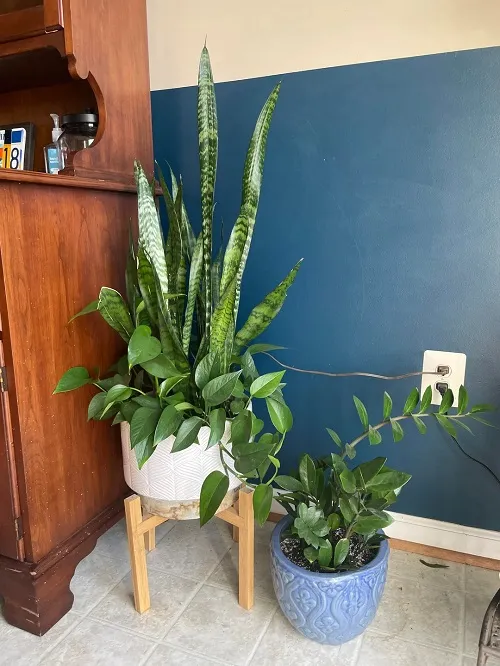
Your starter roster: pothos, snake plant, and ZZ plant. That's it. Three plants, three different personalities, zero drama.
Skills to master this semester:
- Reading soil moisture with your finger, not an app
- Understanding what "bright indirect light" actually means in your home
- Learning to wait before watering instead of watering on a schedule
Milestone: Keep all three plants alive for a full season, and get at least one new leaf on each. New growth is your first report card — it means the plant isn't just surviving, it's comfortable.
Final exam plant: A heartleaf philodendron. It's similar to pothos but slightly less bulletproof, a fair test of everything you learned.
Semester Two: Electives and Expanded Skills
With the basics under your belt, it's time to branch out — literally. This semester introduces you to plants with opinions.
Your roster: a pothos or philodendron variety you've never grown (a Cebu Blue or Brazil, maybe), a peperomia, and a spider plant.
Skills to master:
- Propagation. Snip a cutting, root it in water, pot it up. Nothing builds confidence faster than making a new plant for free.
- Basic pruning and shaping
- Recognizing the early signs of overwatering versus underwatering — and knowing they often look identical until you check the soil
Milestone: Successfully propagate at least two plants and keep the parent plant thriving afterward. Bonus credit if you gift a rooted cutting to a friend. Nothing cements knowledge like teaching it.
Final exam plant: A parlor palm. It'll test your watering discipline and your patience with slower growth.
Semester Three: Intermediate Studies
Welcome to the level where most plant parents plateau — and where you're going to push through instead. The plants here have real requirements, and meeting them means applying everything from Semesters One and Two with precision.
Your roster: a monstera deliciosa, a golden or silk pothos grown on a moss pole (yes, climbing changes the game), and a hoya.
Skills to master:
- Support structures: training vining plants to climb, which encourages bigger, more mature foliage
- Fertilizing on a real schedule with a real product — not guessing
- Repotting without transplant shock
- Diagnosing pests early: fungus gnats, spider mites, and mealybugs, and your first-line treatments for each
Milestone: A monstera leaf with fenestrations (those iconic splits and holes). Fenestration is a status symbol in the plant world for a reason — it only happens when light, water, and support are all dialed in.
Final exam plant: A rubber tree. Fast-growing, responsive, and unforgiving of sloppy care. If it's pushing clean new growth monthly, you passed.
Semester Four: Advanced Studies
This is grad school. The plants here are famously "difficult" — but here's a secret from your professors: difficult plants aren't hard because they're fragile. They're hard because they demand consistency, and by now, consistency is exactly what you've built.
Your roster: a calathea or maranta (the humidity divas), an alocasia, and — if you're feeling ambitious — your first experiment with semi-hydroponics, growing a plant in LECA pellets and nutrient solution instead of soil.
Skills to master:
- Humidity management: pebble trays, humidifiers, and knowing which actually move the needle
- Reading subtle stress signals before they become crises
- Flushing mineral buildup from soil and understanding water quality
- Semi-hydroponics fundamentals — a genuinely different way of growing that will sharpen everything you know about roots
Milestone: A calathea that keeps its leaves crisp-edged through a dry US winter, or an alocasia that holds onto all its foliage instead of dropping leaves every time you blink.
Final exam plant: An Alocasia Polly. If you can keep it from melting down for six straight months, congratulations — you've earned your diploma.
How to Actually Use This Curriculum
A few ground rules from the academic side:
Don't skip semesters. Every failed calathea we hear about usually traces back to a skipped skill — usually watering intuition or humidity basics. The sequence matters.
Repeat courses freely. If your monstera struggles, there's no shame in taking the class again with a different plant. Reteaching is the best learning tool there is.
Track your progress. Keep simple notes: when you watered, what changed, what the plant did. Future you will thank present you.
Audit your schedule. Life happens. If you're drowning, it's fine to pause enrollment — most of these plants are far more patient than a semester calendar.
Your Diploma Is a Jungle
Here's the beautiful thing about this degree: there's no cap and gown, no student loans, and no graduation ceremony — just a home full of plants that are visibly, obviously thriving because of what you learned.
Start where you are. If you're a Semester One freshman with a single pothos on your windowsill, perfect. If you're further along, jump ahead. The curriculum is a map, not a cage.
Class is officially in session. Enroll whenever you're ready.