Midterm Grades Are In: A Seasonal Checkup That Tells You Which Plants Are Passing (and Which Aren't)
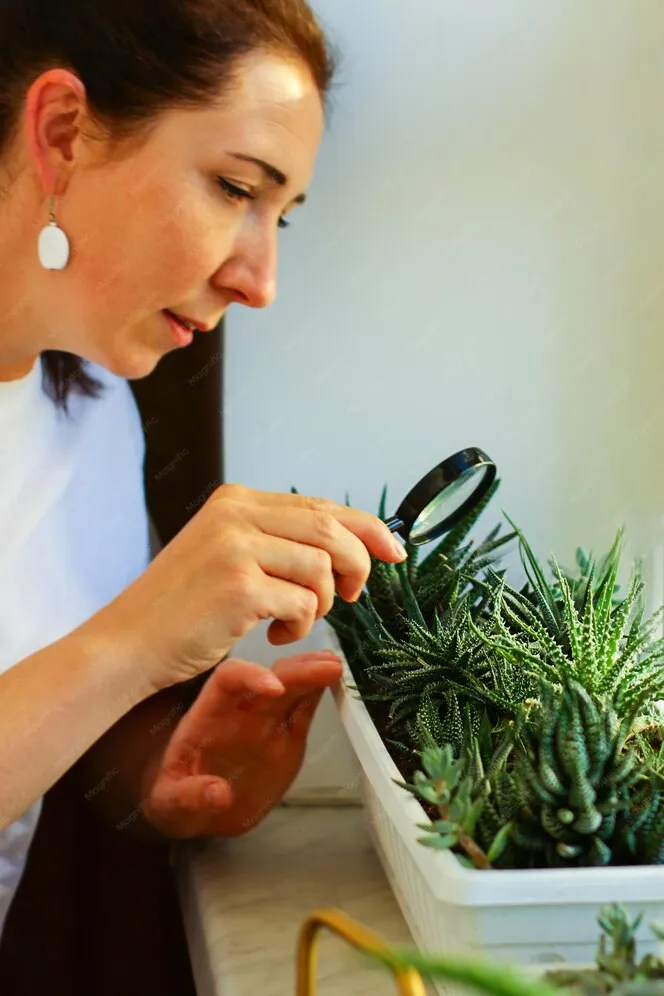
Photo: person inspecting houseplant leaves close up indoor plant care, via img.freepik.com
Every good student gets a progress report, and your houseplants are no different. The problem is that plants never raise their hands and say they're struggling — they just quietly yellow in the corner until one day you notice, six problems too late.
That's why we recommend a formal midterm checkup: one afternoon, twice a year (we like late March and late September, right around the equinox), where you pull every plant off the shelf and give it an honest evaluation. No vibes-based guessing. An actual audit, with actual grades.
Here's how to run it.
Step 1: Set Up Your Grading Station
Grab a notebook, your phone notes app, or our printable checklist (linked at the bottom of this article). You'll also want:
- A magnifying glass or your phone camera zoomed in close
- A moisture meter or just your trusty finger
- A trash bag for clippings
- A damp cloth for leaf cleaning
Work one plant at a time, top to bottom, leaf to root. Don't skip around — you'll lose track of who scored what.
Step 2: Grade New Growth First
New growth is the single best indicator of plant health. A plant pushing out fresh leaves — even small, slightly imperfect ones — is telling you its fundamentals are working.
A: Clear new leaves or stems this season, in reasonable proportion to the plant.
B: Some new growth, but slow or smaller than older leaves. Usually a light or feeding issue.
C: No new growth at all. Not necessarily dying, but stalled. Note it and dig deeper in the next steps.
D/F: New growth that emerges brown, distorted, or dies back quickly. This is a red-flag symptom, not a quirk.
Step 3: Run the Pest Patrol
Flip a handful of leaves — especially new growth and the undersides — and look for the usual suspects: webbing (spider mites), sticky residue (scale or aphids), tiny flies near the soil (fungus gnats), and cottony white clusters (mealybugs).
Any confirmed pest sighting caps the plant's grade at a C until treated, no matter how gorgeous it looks otherwise. Pests spread through a collection faster than gossip in a group chat, and an honest audit catches them early.
Step 4: Evaluate the Soil
Stick your finger two inches into the potting mix and pay attention to what you feel and smell.
- Fresh and earthy? Great — soil gets at least a B.
- Compacted, pulling away from the pot's edges, or hydrophobic (water runs straight through)? That's a D. Old soil stops holding moisture and nutrients properly.
- ** Sour or swampy smell, or soil that stays soggy for a week?** Also a D — that's a root-rot risk.
Soil more than two years old gets an automatic note: "refresh at next repotting window."
Step 5: Audit Your Watering Rhythm
Here's the uncomfortable question: are you watering on a schedule or on your plant's actual needs? If you can't remember the last time you checked the soil before watering, this is your C-minus category.
Look for physical evidence too. Crispy brown tips often point to inconsistent watering or low humidity. Mushy, yellowing lower leaves suggest too much. Neither is fatal — but both show up on the report card.
Tallying the Grades
Now assign each plant an overall letter grade using your best judgment across all four categories. Be honest — inflated grades help nobody.
- A students: Keep doing what you're doing. Maybe propagate a cutting as a victory lap.
- B students: One small adjustment — brighter spot, feeding schedule, fresh topdressing — and they're straight-A plants.
- C students: These are your tutoring cases. Pick the single worst category from their audit and fix it over the next six weeks, then re-grade.
- D students: Worth a rescue effort if the roots are firm and there's any healthy growth left. Repot, treat, prune, and quarantine from the rest of the collection while they recover.
- F students: Here's the hard truth. If a plant has no living growth, mushy roots throughout, and pest pressure that's spread to neighbors, it has effectively graduated — just not in the way you hoped. Composting a lost cause isn't failure; it's freeing up light, time, and emotional energy for plants that can still pass. Every experienced grower composts plants. It's part of the curriculum.
Re-Grade in Six Weeks
The midterm checkup only works if there's a follow-up. Mark your calendar six weeks out and re-score every plant that got a C or below. Did the tutoring work? If yes, congratulations — you just leveled up as a plant parent. If not, you now have much better information about what's actually going wrong.
Plants don't improve from neglect or from panic-buying remedies. They improve from regular, honest assessment — the same way any student does. Twice a year, an afternoon of leaf-flipping and finger-in-the-soil testing will teach you more about your collection than a year of casual glancing.
Download the checklist: Print our one-page Midterm Checkup Worksheet with all four grading categories, a notes column, and a re-test date field. Tape it inside a cabinet door and make it a ritual — your plants (and your future self) will thank you.