Skip the Bigger Pot: Root Pruning Is the Size-Down Trick Your Crowded Shelf Needs

Photo: Unknown authorUnknown author or not provided, Public domain, via Wikimedia Commons
Every plant parent eventually hits the same wall: the plant is thriving, the roots are circling, and the only solution the internet offers is 'repot into something two inches bigger.' But what if you live in a Brooklyn walk-up or a Seattle studio where every shelf is already spoken for?
There's a second option, and it's criminally under-taught: root pruning. Instead of giving the plant more space, you give it a trim. Same pot, smaller root ball, happier plant. Think of it as the difference between moving to a bigger apartment and finally decluttering the one you have.
Why Cutting Roots Sounds Scarier Than It Is
In nature, roots spread out to find water and nutrients. In a pot, they hit plastic, turn, and start spiraling. Left alone, that spiral becomes a dense, matted disc that crowds out soil — meaning less water retention, fewer nutrients, and a plant that dries out overnight.
Root pruning resets the clock. When you trim away the outer tangle, the plant responds by branching new feeder roots closer to the center. Those fresh roots are actually more efficient than the old woody ones. Bonsai growers have used this technique for centuries; your rubber tree doesn't know it's not a juniper.
The Enrollment Requirements: Which Plants Make the Cut
Not every plant passes this class with flying colors. Here's the roster:
Green-light candidates: Ficus (especially benjamina and lyrata), pothos, philodendron, monstera, dracaena, ZZ plants, snake plants, and most palms. These are the forgiving students — they tolerate root disturbance and bounce back reliably.
Yellow-light, proceed with caution: Fiddle leaf figs sulk after any root disturbance, but they can handle it if you're gentle and only remove 10–15% of the root mass.
Red-light, do not attempt: Ferns, calatheas, orchids, and anything recently purchased or already stressed. These plants run on thin, sensitive roots and don't recover well from a haircut.
Scheduling the Lab: Timing Is Everything
The best window is early spring through early summer, when your plant is entering its growth spurt. A pruned plant needs energy to regenerate roots, and it only has that energy during active growth. Pruning roots in November is like asking someone to run a lap right after donating blood.
Plan the session for a morning when you have a full hour, and water the plant lightly the day before — moist roots are more flexible and less brittle than bone-dry ones.
The Step-by-Step Lab Session
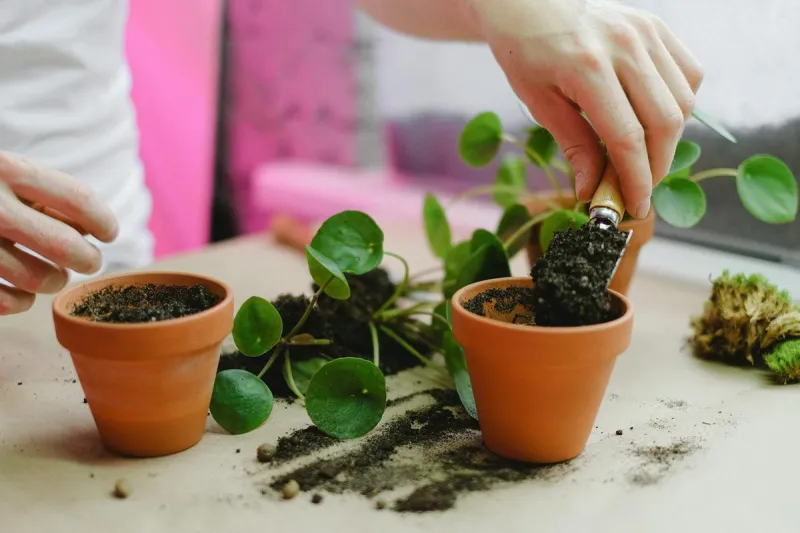
1. Set up your station. You'll need clean, sharp scissors or pruners (wipe them with rubbing alcohol), fresh potting mix, the same pot, a tarp or newspaper, and a watering can.
2. Unpot and inspect. Slide the plant out and lay it on its side. Brush away loose soil so you can see the root structure. Healthy roots are firm and pale or tan; mushy, dark, or smelly roots need removal regardless.
3. Tease and trim. Gently loosen the circling roots with your fingers. Then, using clean cuts, remove the outer inch or so of the root ball — roughly 15–25% of the total mass for tough plants like pothos and ZZs, less for fussier species. Also snip any roots that are dead, mushy, or growing in a hopeless tangle.
4. Replant at the same depth. Add fresh mix to the bottom of the same pot, position the plant so its crown sits at the same height it did before, and backfill. Firm the soil gently — no need to compact it into concrete.
5. Water thoroughly. A deep soak settles the soil around the new root tips and eliminates air pockets.
Post-Op Care: The Recovery Period
A freshly root-pruned plant is in recovery mode, and your job is to lower its workload:
- Water less than usual. With fewer roots, the plant drinks more slowly. Overwatering during recovery is the number-one way to lose a patient.
- Skip the fertilizer for four to six weeks. Fresh mix has enough nutrients, and fertilizer on wounded roots causes burn.
- Hold off on direct sun. Bright, indirect light for the first two weeks keeps stress down.
- Expect a little drama. A yellowing leaf or two is normal. Widespread wilting that lasts more than a week is a sign you removed too much.
The Trade-Off Worth Knowing About
Root pruning keeps a plant the same size — that's the point — but it also means the top growth stays in check. If your goal is a six-foot monstera, this isn't the class for you. But if you want a healthy, full, shelf-sized plant that stays shelf-sized, you've just learned the most space-efficient skill in the houseplant curriculum.
Mark your calendar for next spring, sharpen your scissors, and give it a try on your toughest pothos first. Consider it extra credit for the apartment-dwelling plant parent.