Raise Your Hand: A Field Guide to Getting Real Plant Help (Instead of Guessing)

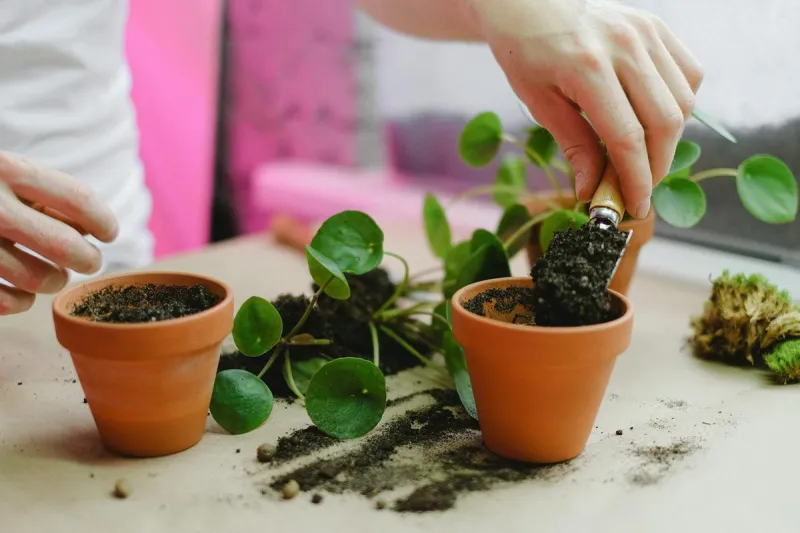
Photo: Wilfredor, CC0, via Wikimedia Commons
Somewhere between your first yellowing leaf and your third, you hit a crossroads. Do you keep guessing? Do you Google "why is my monstera sad" for the fourth time tonight? Do you quietly relegate the poor thing to the corner of shame and hope it sorts itself out?
Here's the thing nobody tells beginners: struggling alone is not a rite of passage. It's just a waste of a perfectly good support system. Plant help exists — real, qualified, often free help — and most plant parents never use it because they don't know it's there or they feel embarrassed to ask.
Consider this your permission slip. Let's map out the office hours.
Start With What You Can Diagnose Yourself
Not every problem needs a second opinion. In fact, a surprising number of houseplant issues come down to one of three culprits: water, light, or pests. Before you go asking for backup, run your own triage.
Stick your finger in the soil. Two inches down, not just the surface. Bone dry? You're probably underwatering. Soggy and sour-smelling? Overwatering, which — surprise — is the most common houseplant killer in America, not neglect.
Check the light honestly. That "bright corner" you love? If you can't read a book there without flipping a switch, your plant probably can't photosynthesize there either.
Flip the leaves. Look for webbing (spider mites), sticky residue (scale or aphids), or tiny cottony specks (mealybugs). Pests are the one problem you can usually confirm solo in under a minute.
If you can name the symptom clearly — "lower leaves yellowing, soil stays wet for a week, no visible pests" — you're already ahead of most people who ask for help. Which brings us to the actual asking part.
Who's Actually on the Faculty
Think of plant help as a tiered system, like going from a TA to a department head.
Your local independent garden center. The staff at a real nursery (not the big-box hardware store) diagnose plant problems all day, every day. Bring a photo — or better, bring the plant. Many shops, especially in plant-friendly cities like Portland, Austin, and Philadelphia, run free or cheap "plant clinics" on weekends. Call ahead and ask.
Your county extension office. This is the best-kept secret in American gardening. Nearly every county in the US has a cooperative extension office affiliated with a state land-grant university, staffed by horticulture agents and trained master gardeners. Many will identify pests and diseases for free, and some states run hotlines or email photo-diagnosis services. These people are the actual experts, and they've heard every question imaginable. They will not judge your crispy fiddle-leaf fig.
Online communities — with a filter. Subreddits and Facebook plant groups can crowdsource a diagnosis fast, but you'll get a dozen confident, contradictory answers. Treat these as brainstorming, not verdicts.
The plant tag and the seller. If a plant declined within weeks of purchase, the retailer may have a guarantee. Save your receipt.
How to Ask a Question Worth Answering
"What's wrong with my plant?" is like showing up to office hours and saying "I don't get the homework." You'll get vague advice because you asked a vague question. Instead, bring your case file:
- The species, as specific as you know it
- A clear photo — one of the whole plant, one close-up of the damaged area, and if you can, one of the soil
- Your care routine: how often you water, how much, and how you decide
- The light situation: which direction the window faces and how far away the plant sits
- The timeline: when symptoms started and whether anything changed (new pot? moved rooms? heating kicked on?)
That last one matters more than people think. A dracaena that declined in November probably got hit by dry forced-air heat, not some mystery disease.
When to Stop Troubleshooting and Start Over
Sometimes the honest answer is that the plant is too far gone, and that's a lesson too, not a failure. If the roots are mushy and smell bad, if the stem is hollow, or if pests have colonized the whole plant, retire it. Compost it, learn the lesson, and enroll a new student in your care.
The goal was never a perfect record. The goal was a green thumb — and green thumbs are built by asking better questions, one office-hours visit at a time.