Buddy Up for Extra Credit: Why Tutoring a Friend Will Fix Your Own Plant Problems
Here's an uncomfortable question: do you actually know why your pothos is thriving, or did you just get lucky?
Most of us fall somewhere in the middle. We've absorbed bits of plant wisdom from YouTube videos, plant store employees, and trial-and-error, and we've stitched it into a working system. It functions — until someone asks us why we're doing what we're doing, and suddenly we're mumbling something about drainage.
That's exactly why you should teach a friend how to care for a plant. Not because they need the help (though they probably do), but because you do. Researchers call it the protégé effect: students who are asked to teach material to someone else end up learning it more deeply than students who study it for themselves. When you expect to explain something, your brain organizes the information differently — looking for gaps, building connections, anticipating questions.
Houseplants are the perfect subject for this. The stakes are low, the feedback loop is visible, and everyone knows someone whose pothos is on its last leg.
Teaching Exposes What You Don't Actually Know
The first time you try to explain watering to a beginner, you'll hit a wall fast. Your friend will ask something simple and devastating, like: "But how do I know when it needs water?"
If your answer is "I just... check it," congratulations — you've found a gap in your own knowledge. The honest answer involves the finger test, pot weight, what the leaves feel like when they're thirsty, and why the plant's species and light exposure change the whole equation. Explaining it out loud forces you to assemble those pieces into a coherent picture, and that picture becomes your knowledge, not just a habit you copied.
A few things mentoring reliably reveals:
- Your watering advice is probably too vague. "Don't overwater" means nothing to a beginner. Teaching makes you get specific — check the soil, note the weight, observe the plant.
- You've been hand-waving light. Most plant parents can't actually define "bright, indirect light" when pressed. Try explaining it to someone standing in their own living room and watch yourself squirm.
- Your troubleshooting is guesswork. When a friend's plant drops leaves, you can't just say "hmm, stress?" You have to walk through the actual diagnostic steps — and in doing so, you learn them properly yourself.
The Mini-Lesson Plan: Tutor Someone in Three Sessions
You don't need a whiteboard or a syllabus (okay, maybe a small syllabus). Here's a simple three-session plan for walking a beginner through their first plant.
Session 1: Match the Plant to the Person
Resist the urge to hand them a fiddle-leaf fig. Instead, run through a quick intake interview: How much light does their space actually get? How often do they forget things? Are they a waterer or a neglecter?
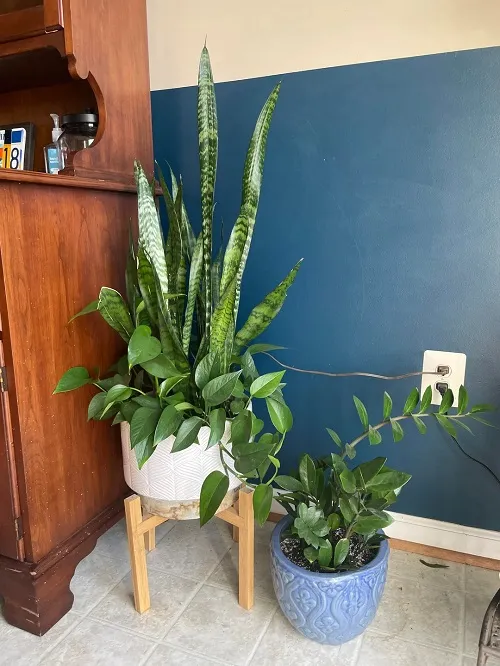
Then pick one — just one — forgiving starter plant. A pothos, a snake plant, or a ZZ plant are the classic picks for good reason. Teaching someone to succeed with one easy plant builds far more confidence than handing them five challenging ones.
Your homework: Explain why you chose that plant for them. If you can articulate that the pothos tolerates low light and clearly signals thirst by drooping, you've just solidified your own understanding of plant-selection logic.
Session 2: The Watering Walkthrough
This is the session where most beginners go wrong, so slow down. Don't just tell them a schedule — teach them the check:
- Push a finger two inches into the soil.
- If it's dry at that depth, water thoroughly until it drains from the bottom.
- Dump the saucer. Always.
Then have them do it while you watch. Explaining and demonstrating are different skills, and you'll quickly discover whether your mental model of "moist but not soggy" actually translates to real soil in a real pot.
Your homework: Text them a reminder to check (not water) once a week for the first month.
Session 3: Reading the Leaves
After a few weeks, something will go wrong. A yellow leaf, a brown tip, a leggy stem. This is the best part of the whole process — because now you get to troubleshoot together, out loud.
Walk them through the diagnostic order: water first, then light, then pests, then patience. Ask questions instead of giving answers: "When did you last water? Has the light changed since you moved it?" Every question you ask forces you to reason through cause and effect, which is exactly the muscle the protégé effect is about.
The Bonus You Didn't Expect
Something interesting happens once you've taught someone the basics: you start noticing your own plants more carefully. You catch yourself running the finger test on your own monstera with fresh attention. You finally look up why your calathea's edges are crisping instead of shrugging at it.
Mentoring also keeps you honest. It's remarkably hard to tell a friend "never let a plant sit in standing water" and then walk past your own pothos sitting in a full saucer. Accountability, it turns out, works on plant parents too.
And the best part? Your friend gets a thriving plant, you get sharper skills, and somewhere down the line they'll teach someone else — and the whole thing propagates, kind of like a cutting.
So here's your assignment, and yes, it's graded: find one friend with a struggling plant or an empty shelf, and offer to walk them through their first one. You'll be surprised how much you didn't know — and how quickly teaching fixes it.